



counterflow cooling tower
2023-09-20 16:48In a counterflow cooling tower design, the fundamental operational principle revolves around the opposite directional flow of air and water streams— a configuration specifically engineered to optimize heat transfer efficiency. Unlike parallel flow systems where air and water move in the same direction, counterflow designs facilitate a more thorough interaction between the two mediums. Specifically, the air flow first enters an open plenum (a dedicated chamber) located beneath the tower’s fill media— the core component responsible for maximizing the contact surface area between air and water. Once inside the plenum, the air is drawn upward vertically through the fill media by powerful fans installed at the top of the tower, creating a consistent upward airflow. Conversely, the warm process water (typically recycled from industrial machinery, HVAC systems, or power generation units) is pumped to the upper section of the tower and sprayed uniformly through a network of pressurized nozzles positioned near the top. This sprayed water then cascades downward through the fill media, moving directly opposite to the upward-moving air stream, ensuring prolonged contact between the two fluids.
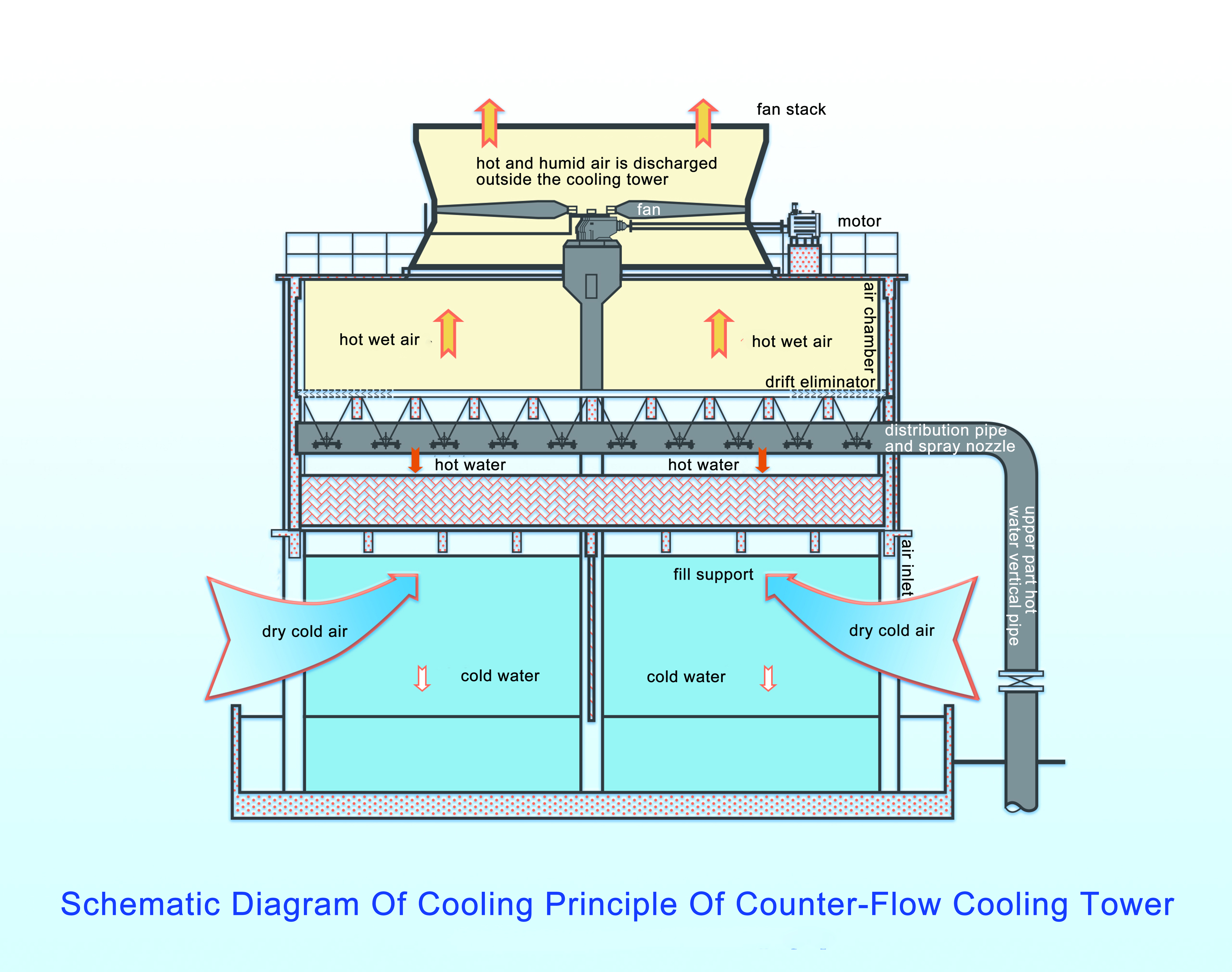
Advantages of the Counterflow Design
1. Enhanced Freeze Resistance: The spray water distribution system inherent to counterflow towers is a key contributor to their superior freeze resistance compared to other designs (such as crossflow towers with gravity-fed water distribution). By atomizing water into fine droplets via pressurized nozzles, the system minimizes the risk of water pooling and stagnation— two primary causes of freezing in cooling towers during low-temperature operations. Even in cold climates, the continuous movement of sprayed water droplets and their interaction with upward airflow reduce the likelihood of ice formation on critical components like fill media, nozzles, or basin walls, ensuring reliable year-round operation.
2. High Heat Transfer Efficiency: The breakup of water into small, uniform droplets during the spray process significantly increases the water’s surface area exposed to the air. This expanded contact area, combined with the counterflow direction (which maintains a consistent temperature gradient between the air and water throughout their interaction), allows for more efficient heat exchange. As the warm water droplets fall through the fill, heat is rapidly transferred from the water to the cooler air. The upward-moving air absorbs this heat and carries it out of the tower, while the cooled water collects in the basin below. This efficient heat transfer enables counterflow towers to achieve lower outlet water temperatures, making them ideal for applications requiring precise temperature control, such as power plants or heavy industrial processes.

Disadvantages of the Counterflow Design
1. Higher Initial and Long-Term Costs: One of the primary drawbacks of counterflow cooling towers is their typically higher cost profile, both in terms of initial installation and long-term maintenance. This cost premium is primarily driven by the specialized pump requirements: the system requires high-pressure pumps to generate the necessary force for spraying water through the top-mounted nozzles— a more energy-intensive and expensive setup compared to the gravity-fed distribution systems used in crossflow towers. Additionally, the complex network of pressurized nozzles, piping, and associated control systems adds to the initial capital expenditure. Over time, these high-pressure components also demand more frequent maintenance (e.g., nozzle cleaning, pump servicing) to prevent clogging or mechanical failure, further increasing operational costs.
2. Limited Flexibility in Variable Water Flow: Counterflow towers face significant challenges when operating with variable water flow rates. The spray characteristics (e.g., droplet size, distribution uniformity, coverage area) are carefully calibrated to work optimally at a specific design flow rate. Any deviation from this rate— whether an increase or decrease— can negatively impact the spray pattern. For example, reducing the flow rate may result in uneven water distribution, with some sections of the fill media receiving insufficient water (leading to reduced heat transfer efficiency), while increasing the flow rate may cause excessive droplet size or nozzle overloading (resulting in water carryover). This lack of flexibility makes counterflow towers less suitable for applications where water flow rates fluctuate frequently.
3. Increased Noise Levels: Counterflow cooling towers are typically noisier during operation compared to other designs, primarily due to the greater water fall height. After passing through the fill media, the water droplets fall from the bottom of the fill into the cold water basin located at the base of the tower.